

Finding and Identifying Magnetic Meteorites
Magnetic meteorite hunting: A down-to-Earth guide | ( Last Updated: 05/18/2026 )
In this article we will cover the following topics:
Shop Meteor Finding Magnets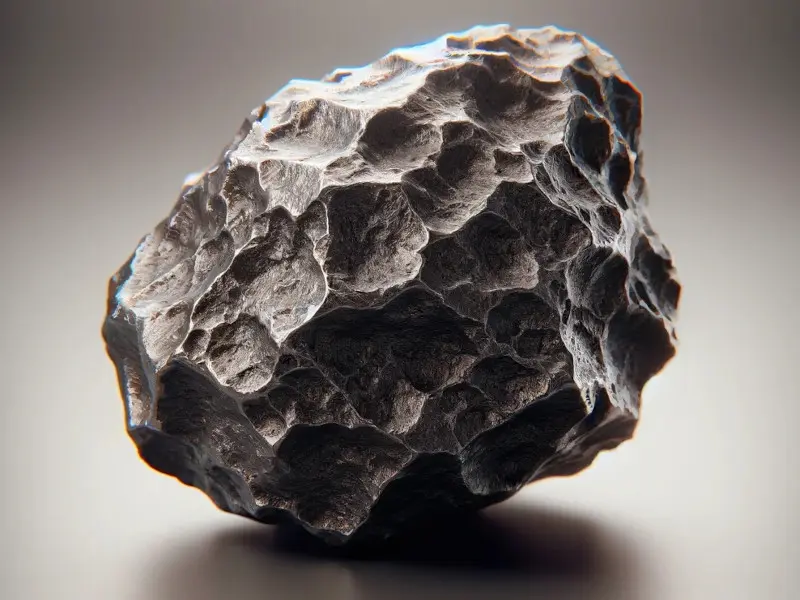
Are Meteorites Magnetic?
Yes, many meteorites can be magnetic because if they contain iron. In fact, hand magnets are one of the quickest ways to help identify a possible meteorite in the field.
Are All Meteorites Magnetic?
No, not all meteorites are magnetic and even if they are, it may only be partially magnetic. Some meteorites contain only small amounts of metal and may react weakly to a magnet, while other meteorites may show little or no magnetic attraction at all.

5 best signs that a meteorite could be magnetic include:
-
Attracts to strong neodymium magnet
-
High weight for its size
-
Dark fusion crust on the outside
-
Metal flakes or iron content
-
Rounded dimples called regmaglypts (see section 5)
1. Find Meteorites with Magnets!
Meteorites and meteorite hunting are growing in popularity, especially with new awareness through television shows like Meteorite Men. Strong neodymium magnets are a great tool to have in any meteorite search.

2. What are Meteorites?
A meteorite (space rock) is a piece of stone or metal that has reached the Earth's surface from outer space. The study of meteorites involves many different branches of science, including chemistry, geology, physics and even biology. Consider the ALH84001 Martian meteorite that may show signs of early bacterial life forms.
We've been corrected a few times using the wrong name for meteorites. What you call these objects depends on where it is. Here are three quick definitions to help get the terminology correct.
-
Meteoroid: A meteoroid is a small body traveling through space, smaller than an asteroid.
-
Meteor: A meteor is a meteoroid that has entered the Earth's atmosphere. It is typically heated to luminosity, showing a visible streak in the sky.
-
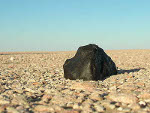
Meteorite: A meteorite is a mass of stone or metal that as reached the Earth's surface from outer space; a fallen meteoroid.


Shop Meteorite Finding Magnets
Magnets perfect for finding and identifying magnetic meteorites.


3. How to Find Meteorites; Are Magnets Useful in Searching for Meteorites?
Identifying magnetic meteorites/space rocks
Most meteorites contain at least some nickel and iron, while many consist almost entirely of nickel-iron. Since both nickel and iron are strongly attracted to magnets, objects can be tested quickly and easily while in the field.
Top 3 Ways to Find and Identify Meteorites
-
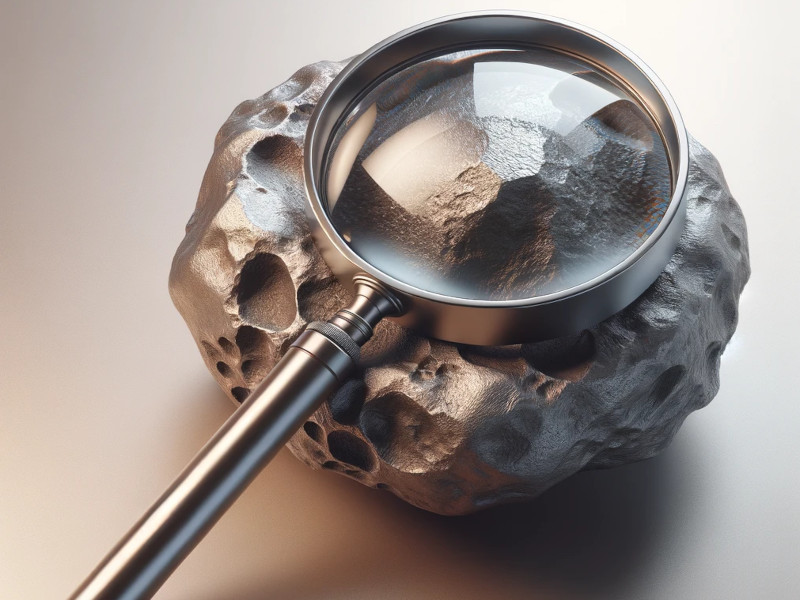
Visually: In many places, a meteorite will be visible as different from the surrounding terrain. Careful visual search is a great way to start searching for meteorites. In places like Antarctica or deserts, this can be very effective.
-
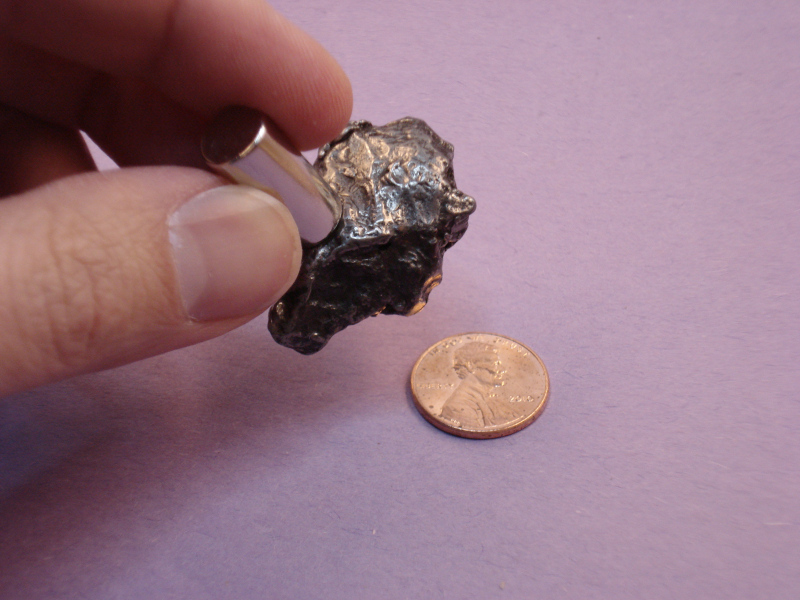
With magnets: Many meteorite hunters like to use a strong magnet placed on the end of a stick. When searching, one can easily touch the magnet to any suspicious looking rocks to check for iron. Check out our meteorite hunting magnets to start finding your own magnetic meteorites today!
-
With a metal detector: If a meteorite is some distance below the surface of the ground, you won't be able to pull it up with a strong magnet. The strength of a magnet's attraction drops quickly with distance. You probably won't find a meteorite that's any distance below the surface with a magnet. A discussion of how to purchase a metal detector is probably enough for a whole separate article! Even if you are using a metal detector, it's still helpful to bring a strong magnet to help identify it.


4. What Magnets Should I Use for Identifying Meteorites?
Best types of magnets to use for finding magnetic meteorites:
-
Cylinder meteorite magnets:
For a good, basic magnet used for identifying the presence of iron and nickel, a simple cylinder magnet is a great choice. We've used a D6C, a 3/8" diameter x 3/4" tall cylinder. It's strong, yet fairly easy to handle. Keep one of these tucked into the corner of your toolbox, where you'll find many uses for it.
If you want a stronger cylinder, consider the D8X0 1/2" diameter x 1" tall cylinder. It is twice as strong as the D6C, but is still fairly easy to handle thanks to its tall height.
-
Disc meteorite magnets:
We've also seen the guys on Meteorite Men use a big, strong disc magnet for identifying meteorites. A 1" diameter disc like our DX08 or DX08B-N52 should be more than strong enough to use this way.
-
Countersunk meteorite magnets:
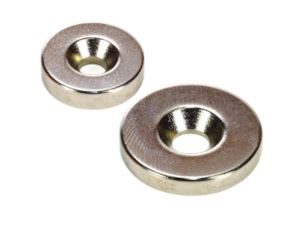
Many meteorite hunters like to attach a strong magnet to the end of a walking stick. You can also use an old golf club, which is light and easily carried. Our countersunk magnets are a good choice for this, or any other place where you want to attach the magnet with a simple screw.
-
Mounting meteorite magnets:
Even better, we recommend using some of our strong mounting magnets for your walking stick. They are powerful and more durable than a plain magnet. They consist of a disc or ring magnet encased in a steel cup, which helps make them magnetically stronger than a magnet alone. The steel cup also protects the brittle neodymium magnet from sharp impacts, so you can expect it to last longer getting banged up in the field. Any of the magnets listed below are a great choice for this, and allow easy attachment with a single, flat-head screw.

Consider covering the end of the magnet with a piece of tape before dragging it across the ground. This will help protect the magnet from scratches, and ensure it lasts for many years of meteorite hunting.
Best meteorite magnets for finding and identifying meteorites:
Part Number Image Diameter Magnet Strength MMS-A-X0 meteorite hunting magnet 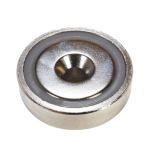
1" (25.4mm) 36.9lb (16.5kg) MMS-A-X4 meteorite hunting magnet 
1 1/4" (31.8mm) 58.3lb (26kg) MMS-A-X8 meteorite hunting magnet 
1 1/2" (38.1mm) 92.3lb (41.2kg) MMS-A-XC meteorite hunting magnet 
1 3/4" (44.4mm) 122.5lb (54.7kg) MMS-A-Y0 meteorite hunting magnet 
2" (50.8mm) 168.3lb (75.1kg) MMS-A-Y8 meteorite hunting magnet 
2 1/2" (63.5mm) 254.0lb (113.4kg) MMS-A-Z0 meteorite hunting magnet 
3" (76.2mm) 350.3lb (156.4kg) Meteorite Magnet on a Stick
The below video shows a DIY meteorite magnet stick where the countersunk meteorite magnet is screwed into the stick making easy to search for magnetic rocks without bending over.


5. Top Tips on How to Identify Magnetic Meteorites
Magnetic space rocks have gotten more interest from many enthusiasts and there are many great websites that describe how to identify a meteorite. One of our favorite summaries is this How to Identify a Meteorite page excerpted from the University of New Mexico. The desert is a great place to find meteorites, since they can sit for years without corroding in such dry weather! The site also includes some pictures to help tell meteorites from so-called meteor-wrongs.
How do I find rare non-magnetic meteorites?
Identifying non-magnetic meteorites can be challenging because they do not respond to magnetic tests. To identify a non-magnetic meteorite, you will need to rely on other physical and visual characteristics. While our guide is mainly for using magnets to find meteorites, the below key characteristics also apply to meteorites that are not magnetic.
Some key characteristics of meteorites include:
-
Iron-nickel metal and magnetism: Nearly all meteorites contain iron and nickel. This metal is ferromagnetic and is strongly attracted to magnets. While not all pieces of magnetic rock are asteroids (you can find human-made chunks of iron), most meteorites do have some nickel-iron in them.
-
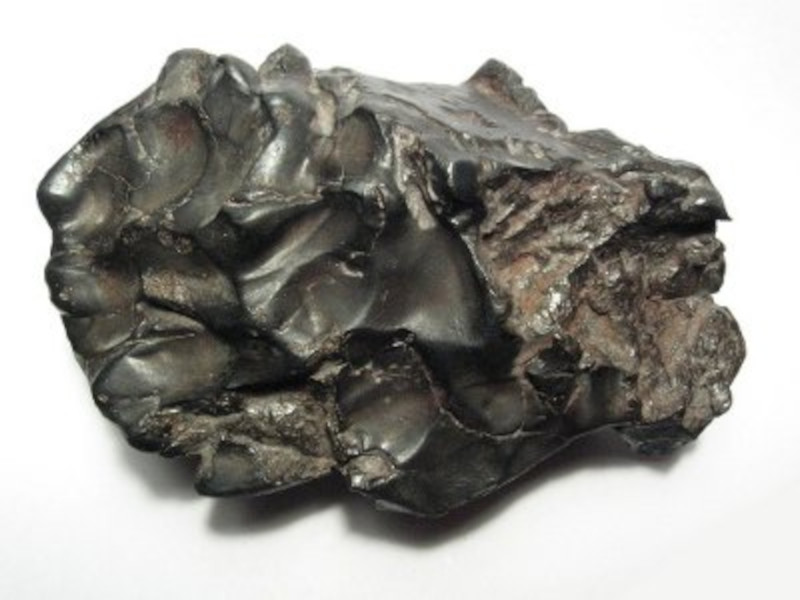
Regmaglypts: The surface of a meteorite often has shallow depressions or cavities resembling thumbprints in wet clay or Play-Doh. Regmaglypts can also help identify non-magnetic meteorites as the characteristics appear in both.
-
Density: Meteorites, especially iron ones, are much more dense than most rocks you'll find. The link above describes how to measure the density of a suspected meteorite. We've found that meteorites can be so heavy that it's fairly obvious when handled. Just imagine how heavy a rock of that size should feel, then pick it up. Even a non-magnetic meteorite can be more dense and will weigh more for a given size.

6. Do Hand Magnets Destroy the Magnetic Memory of Meteorites?
The answer may be yes or no. When meteorites enter Earth's atmosphere, they are subject to super intense heat that heats up the meteorite and forms a fusion crust outer shell, causes ablation or material burning off, or causes regmaglypts or indents. Depending on the size of the meteorite, the heat may re-orient the magnetic domains of the outer shell or the entire rock. Reaching the curie temperature and re-orienting the magnetic domains requires a much lower temperature than forming a fusion crust. Therefore, you cannot go off of just appearance like the below magnetic meteorite cross-section. The magnetic memory damage from atmospheric entry likely extends much deeper than just the fusion crust and would need precision equipment to see how deep it extends.
If the meteorite is larger, the inside may be unaffected by the heat and still have magnetic domains that have not been re-oriented. However, using a mounting magnet which has a smaller magnetic field may only reach the same distance as the heat, and thus not damage or re-orient the internal "magnetic memory" or "magnetic record". It would also still provide valuable information to a paleomagnetists who study past records of magnetic fields in rocks.

When it's ok to use a strong magnet for hunting meteorites:
-
You do not plan to sell the meteorite or perform any expensive testing on it. A strong magnet would only change the magnetic domain or magnetic polarization direction and nothing visually.
-
When the meteorite is larger in size compared to the magnet. If you expect to find smaller meteorites and care about the magnetic memory, you can use a smaller meteorite hunting mounting magnet. Mounting magnets already have a smaller magnetic field, but stronger hold to ferrous metal due to the stainless steel cup design, making them the best magnets for hunting meteorites.
-
If the outer shell on the meteorite is not flat. Features like jagged edges and regmaglypts all create air gaps and drastically lower magnetic fields. Magnets have a steep diminishing returns curve for magnetic pull force and field over a distance, so sharp edges and dimples in the meteorite would create a large gap which make it harder for the magnetic field to reach the center of the meteorite and thus leaving the magnetic memory in-tact.
When it may be ok to use a strong magnet for hunting meteorites:
-
You plan to perform magnetic domain testing with lab equipment or plan on selling to science lab, museum, paleomagnetist or any place that may want to study the specimen. If you do plan to test the magnetic memory of your magnetic meteorite, make sure you use a smaller magnet in proportion to the overall size. Our article shows ways to identify a possible magnetic meteorite first and you can use a magnet later to confirm your hypothesis. If you hesitate on using a magnet at all, you can try using a susceptibility meter as mentioned in the MIT article on magnetic meteorites, but they are quite costly.
Should I Put Down My Meteorite Hunting Magnets?
As mentioned above, there are ways to prevent damage to magnetic memories. Atmospheric entry heat may already destroy much of the magnetic domains, but if you still want to be on the cautious side, you can acquire a susceptibility meter per the MIT article.
Even though some magnetic meteorites can be visually identified, many might be too difficult to distinguish from common rocks and you may overlook many meteorites in the process of trying to preserve a magnetic memory. I know I would much rather have a magnetic meteorite with a partial magnetic memory in hand, than no magnetic meteorite at all!
In the end, the choice is yours. If you exercise proper caution you should be fine and if the meteorite is only for your own collection or hobby, then you have nothing to worry about. Good luck and happy hunting!


